
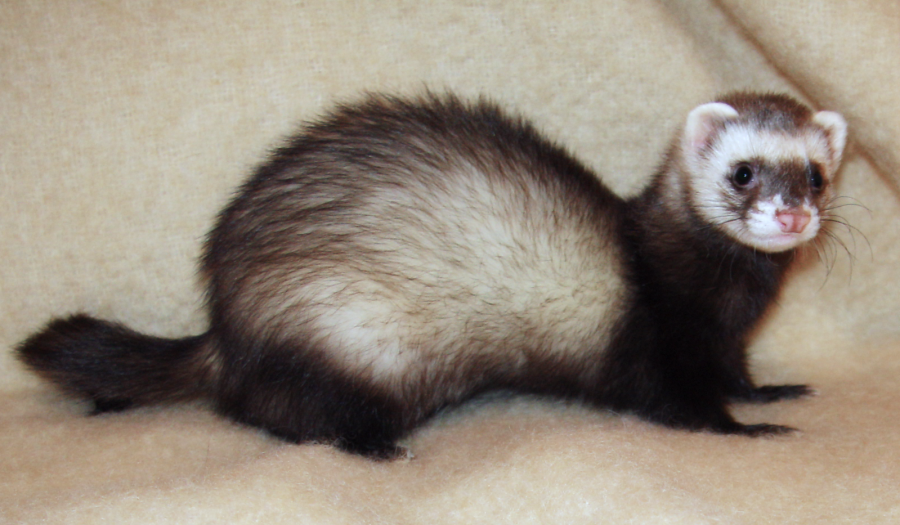
A ferret is not a beginner’s pet, and that is precisely why it teaches so much. A hamster can be admired through glass and still be perfectly well cared for. A ferret cannot. It has to be let out, supervised, cleaned up after, played with and gently corrected every single day, and it notices immediately when somebody forgets. For a child of roughly eight or older, that daily feedback loop is one of the most honest lessons in responsibility a household animal can offer.
Families often arrive at ferrets sideways — a cousin had one, a video was funny — and then meet an animal with the curiosity of a toddler, the sleeping habits of a cat and the escape instincts of a small burglar. Managed well, that combination turns a child into an observer, a planner and a patient teacher. Managed badly, it produces a bitten finger and a frightened animal. The difference lies almost entirely in how the adults set the rules in the first fortnight.
An animal that answers back
Most small pets tolerate handling. A ferret invites it. It will drag a sock into a tunnel and wait to see whether you follow, bounce sideways with its mouth open in what keepers call the war dance, and chuckle — a soft clucking noise known as dooking — when a game is going well. Because the animal initiates, a child gets immediate, unmistakable feedback about whether they are doing it right.
That feedback is where the learning sits. Within a few weeks most children can tell the difference between a ferret that is inviting more play and one that has had enough: the flattened body and puffed tail, the wide yawn, the sudden retreat under the sofa. Reading another creature’s arousal level and choosing to stop before it complains is a genuinely difficult social skill, and a ferret teaches it faster than almost any other pet because the signals are so exaggerated.
Daily work a child can genuinely own
Responsibility only becomes real when a task belongs to somebody. Vague help with the ferret teaches nothing; two named jobs that nobody else will do teaches a great deal. Because ferrets graze eight to ten times a day and cannot fast comfortably, the food and water checks are meaningful rather than symbolic, and a child can see the consequence of skipping them within hours.
- Fresh water morning and evening, in a heavy bowl as well as a bottle, because ferrets play in water and will empty a bowl.
- A quick look to confirm dry food is still available, and a sniff test of any fresh treat left over from yesterday.
- Scooping the litter corner twice a day — a ferret uses it constantly and the smell of the whole room depends on this one job.
- A five-minute cage tidy: hammocks straightened, spilled bedding swept, toys returned to the box.
- Hammocks and blankets into the wash once a week, which is usually the task children like least and remember longest.
- A monthly weigh-in on the kitchen scale, written on a chart, so that weight loss is spotted early rather than guessed at.
Nail trims, ear checks, the room safety sweep and every veterinary decision stay with the adults. Handing a child the pleasant jobs and keeping the consequential ones is not a failure of trust; it is what makes it safe to give them real ownership of the rest.
Litter habits, and the patience they require
Ferrets back into corners to relieve themselves, so the trick is to put shallow, high-backed pans in the corners the animal has already chosen rather than the corners that suit the furniture. Carry the ferret to the pan when it wakes, wait, and reward success with a lick of meat paste. Most ferrets end up reliable perhaps eight times out of ten, and no amount of effort makes them perfect.
That imperfect result is the lesson. A child who has worked at litter training for a month learns something a chore chart cannot teach: a living creature is not a machine you configure once. You improve the odds, you clean up the rest, and you never punish an accident, because fear makes a ferret hide its mess rather than change its habits.
Teaching a ferret not to nip
Young ferrets investigate the world with their mouths, and their littermates had fur. Human skin does not, so nipping has to be unlearned, and the method is where children meet the idea that correction is about timing and consistency rather than force. The sequence that works is dull and repetitive: the moment teeth close, say a short firm “no”, support the ferret gently by the scruff so that it stops, offer a toy instead, and if it tries again put it in its carrier for sixty seconds and then let it out to try the game again.
What children have to resist is the instinct to squeal and snatch their hand away, because to a ferret that is an excellent reaction and worth repeating. Nothing physical is ever appropriate — no flicking, no tapping the nose. Trust is rebuilt by hand-feeding: a child who spends a fortnight offering scraps of cooked meat from an open palm usually ends up with the ferret that nips least, and has learned by doing that patience beats punishment.
Play as the training session
Ferret training is mostly play with a purpose. Rigid dryer hose becomes a tunnel system, a paper bag becomes an ambush, a shallow box of uncooked rice becomes a digging pit. Inside those games a child can teach small, finishable skills: recall to a squeaky toy followed by a treat, climbing on to a shoulder on cue, coming out of a tunnel when called by name. Ferrets learn quickly when the reward is food and the session is short.
Each trick is a small project with a beginning, a plan and an end, which is unusually satisfying for a child who is used to being told that progress takes years. Harness training for supervised time outdoors is the natural next step, though it belongs after the vaccinations are in place and always with an adult holding the lead.
Where the adult line has to stay
- Ferrets are not legal everywhere in the United States. California and Hawaii prohibit them, New York City does too, and several other municipalities have their own rules. Check state and city law before you fall in love with one.
- They need a rabies vaccine licensed for ferrets and a ferret-safe canine distemper vaccine, kept current. That is an adult responsibility and a condition of keeping the animal safely around children.
- A ferret bite is more consequential than a hamster nip. Toddlers and unsupervised young children should not have free access, and the ferret should never be cornered or picked up while asleep.
- Ferrets squeeze through gaps of about an inch and swallow foam, rubber bands and pencil erasers. Intestinal blockage is a true emergency, so proofing the room is an adult job that gets redone every time the furniture moves.
- Recliners, sofa beds, washing machines and tumble dryers are the classic fatal accidents. A household rule about checking before you sit, close or switch on is not negotiable.
- Six to eight years of life, with adrenal disease and insulinoma common in the later half, means real veterinary bills. A child cannot consent to that budget, so the adults must.
Signs that need a veterinarian
- Refusing food for more than a few hours, drooling, or pawing at the mouth.
- Vomiting, or dark tarry stools.
- Weakness, wobbly hind legs, blank staring episodes or collapse.
- Hair loss that begins at the tail, or swelling of the vulva in a spayed female.
- Laboured breathing, coughing, or discharge from the eyes or nose.
- Straining in the litter pan with nothing to show for it.
None of these is a wait-and-see problem. A ferret is a small animal with a fast metabolism, and a day of not eating is already serious. Teaching a child to report what they have noticed straight away, without worrying about whether it turns out to be nothing, is part of the responsibility too.
Next: Ferret Care Guide · What Children Learn from Growing Up with a Pet · Choosing Your First Pet · Small Rodents, Big Lessons
This article is educational and does not replace veterinary advice. Ferret medicine is a speciality: before adopting, confirm that a clinic near you treats ferrets, and take any of the warning signs above to that clinic the same day.
Leave a Reply