
Category: Dog Training: Medium and Large Breeds
-
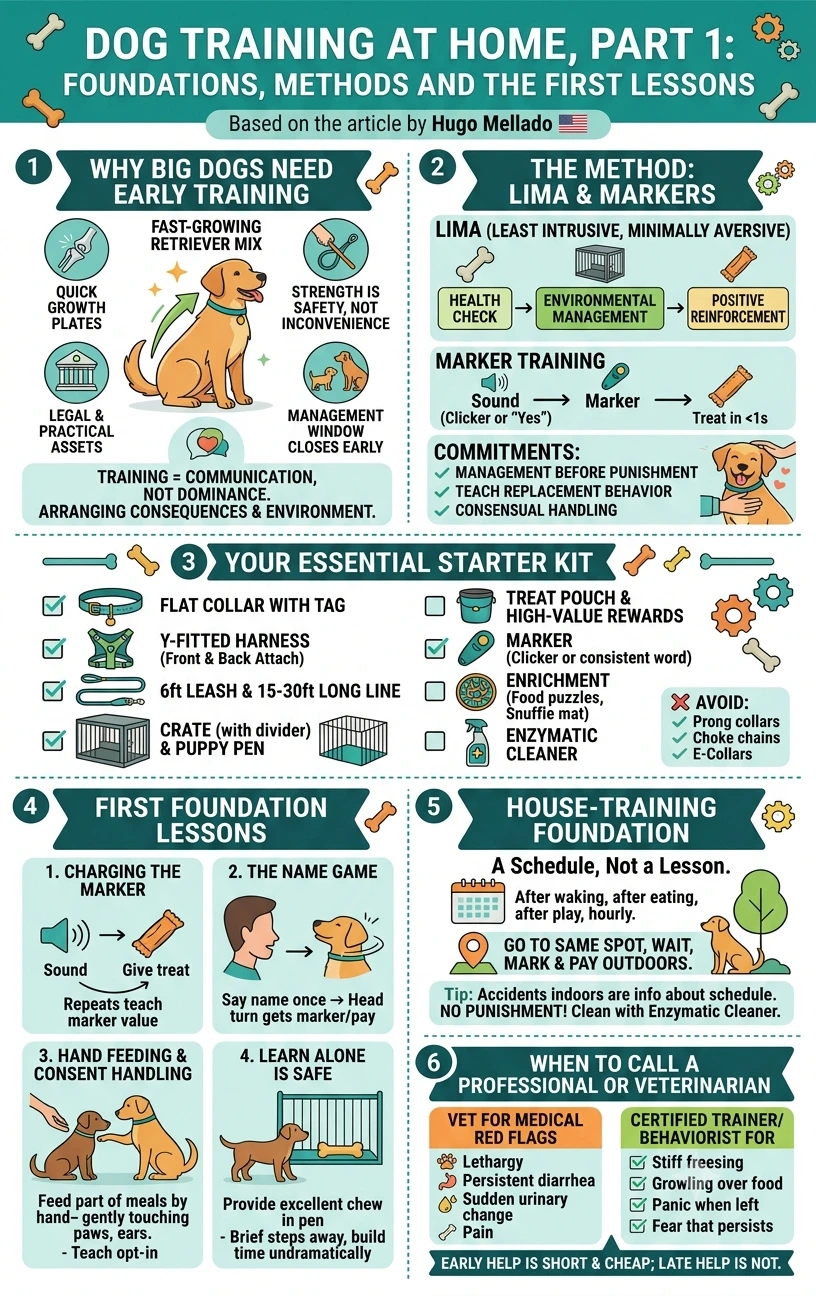
What training really is, why it matters more with a large breed, how the main schools of thought differ, and the four first lessons to teach a puppy before any obedience begins.
-
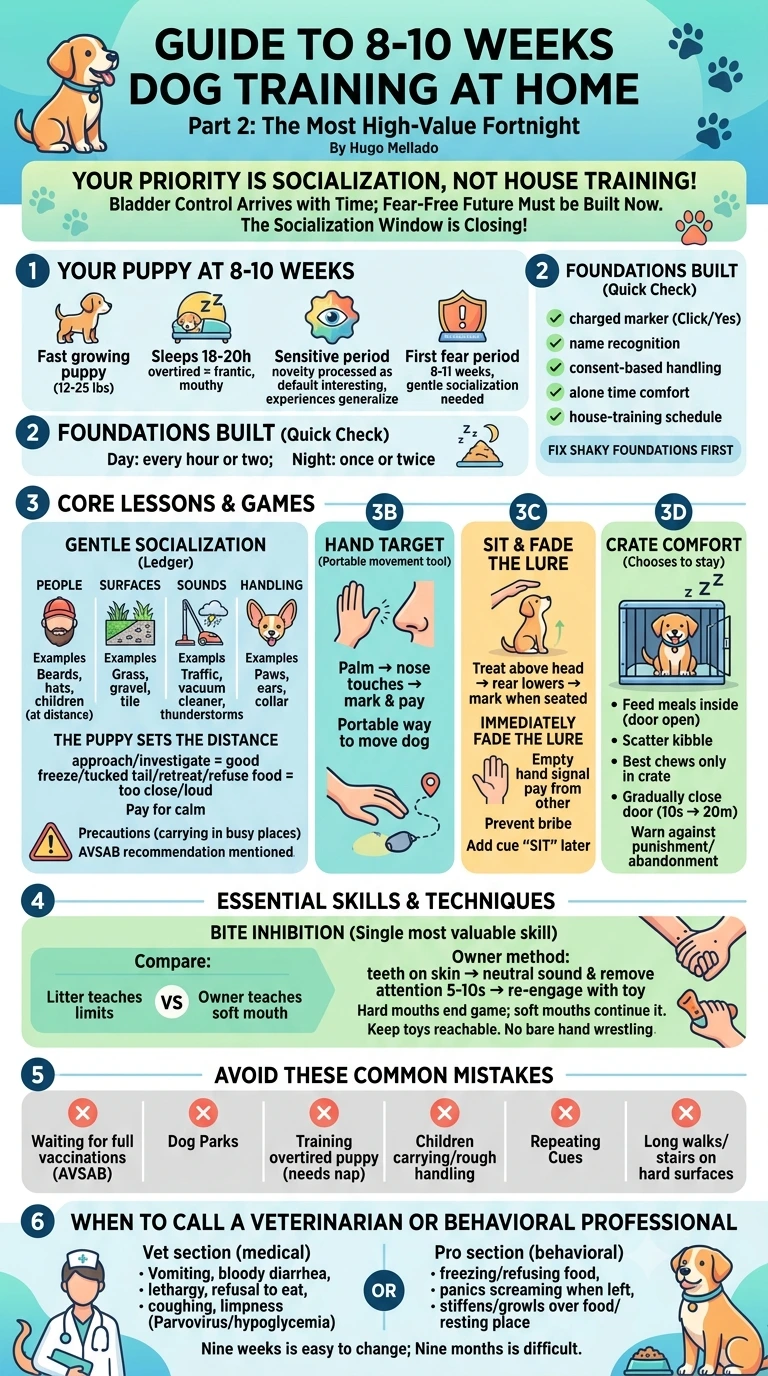
The most valuable fortnight of a dog’s life: how to build a real socialization plan, teach a hand target and a sit, make the crate genuinely welcome, and start bite inhibition.
-
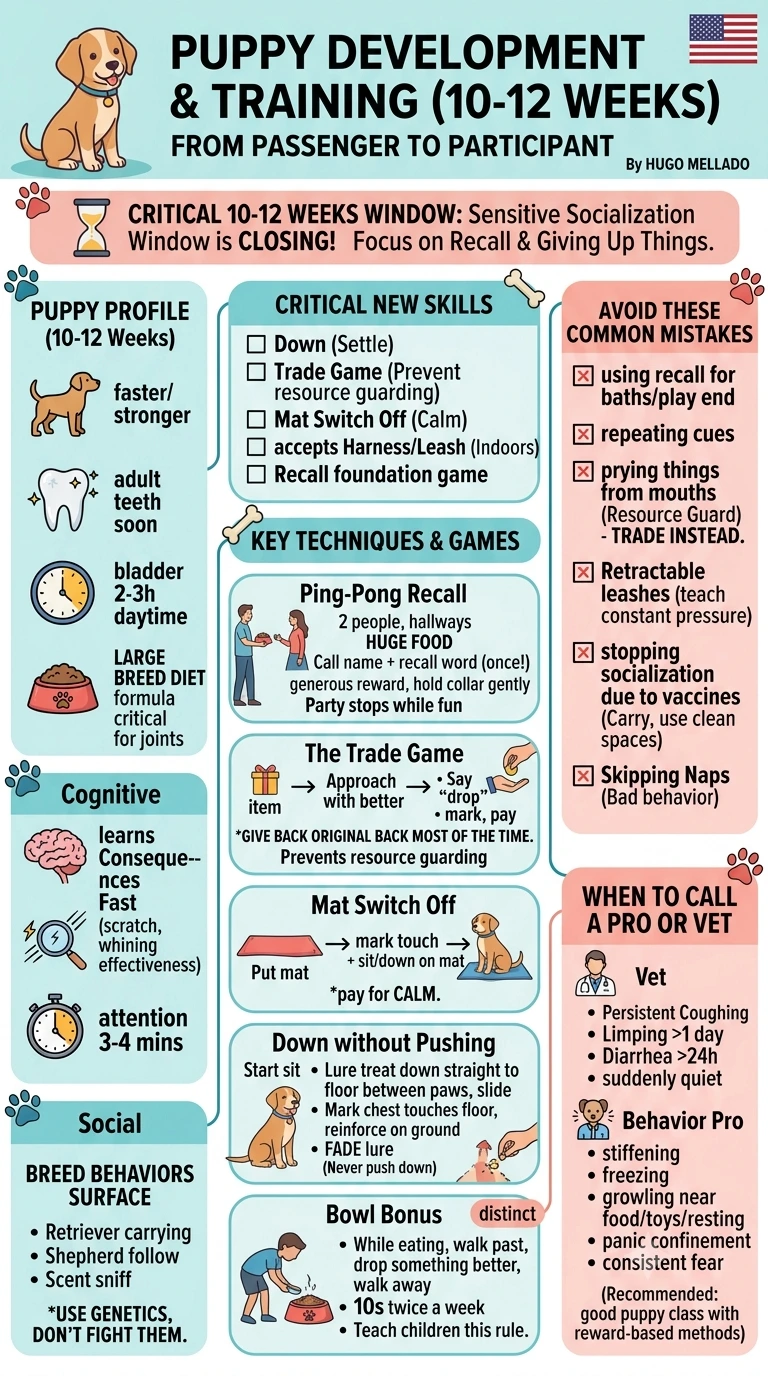
Down, the recall game, harness and leash without force, the trade that prevents resource guarding, and a mat that means switch off: the five skills to build between ten and twelve weeks.
-
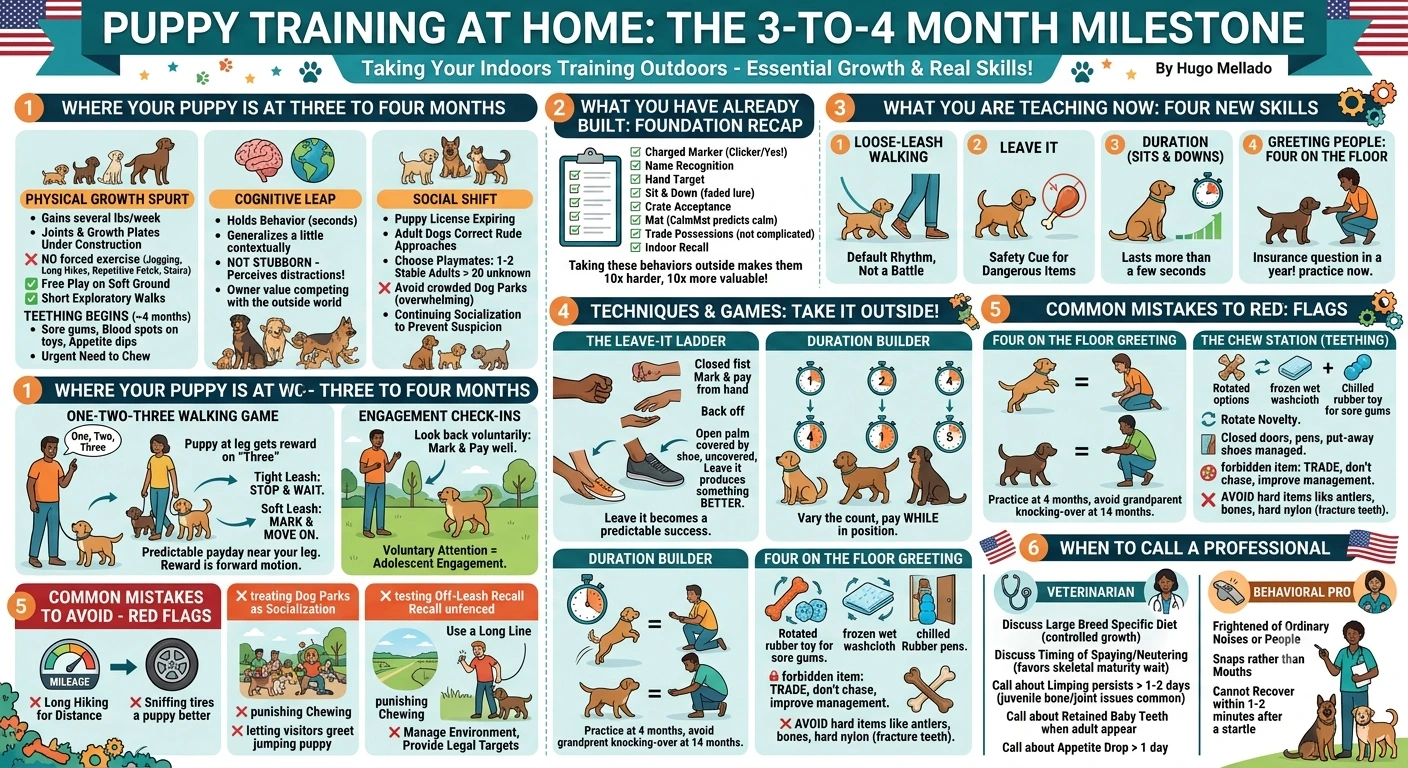
Loose-leash walking, leave it, duration and greeting people with four feet on the floor: how to take everything your puppy learned indoors out into a distracting world.
-
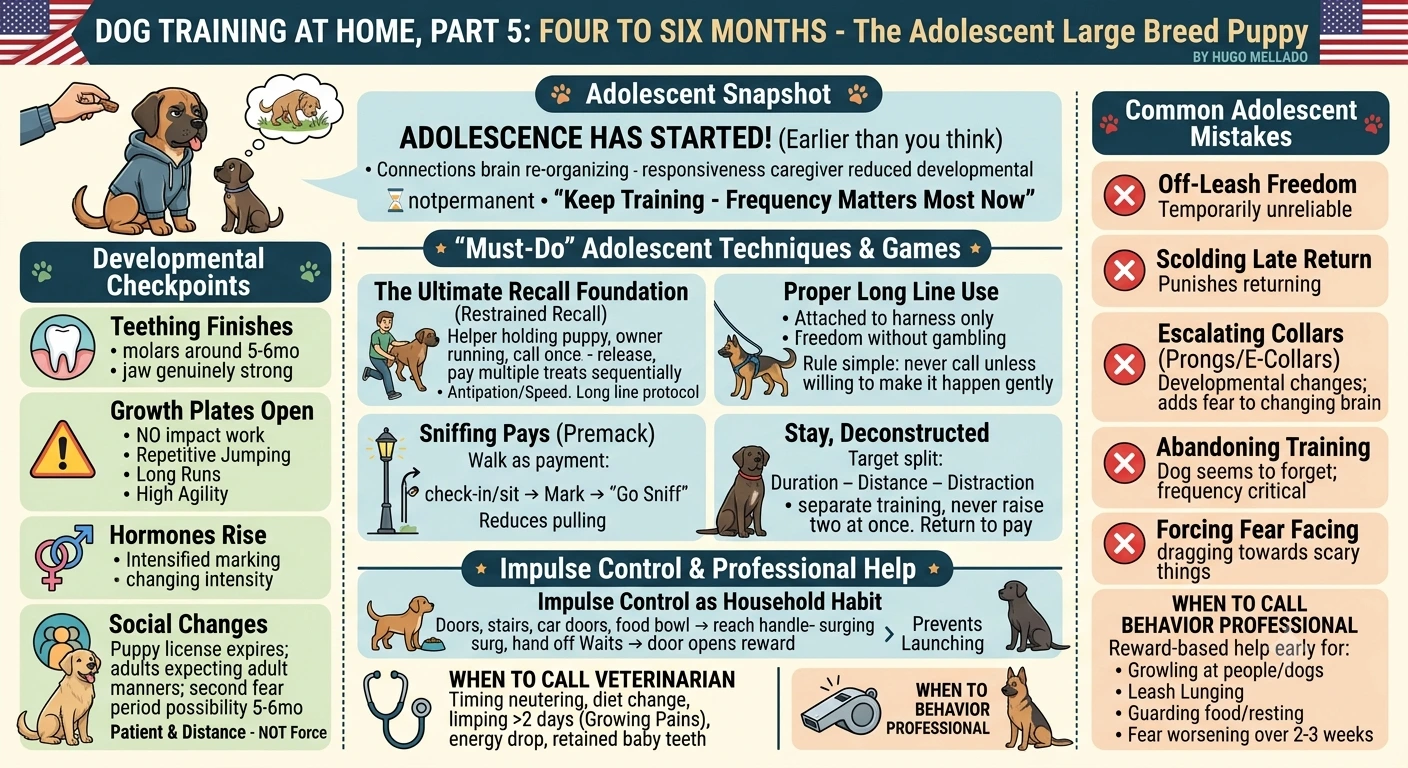
Adolescence begins: how to build a recall that survives distraction, take stay apart into duration, distance and distraction, and turn impulse control into a household habit.
-
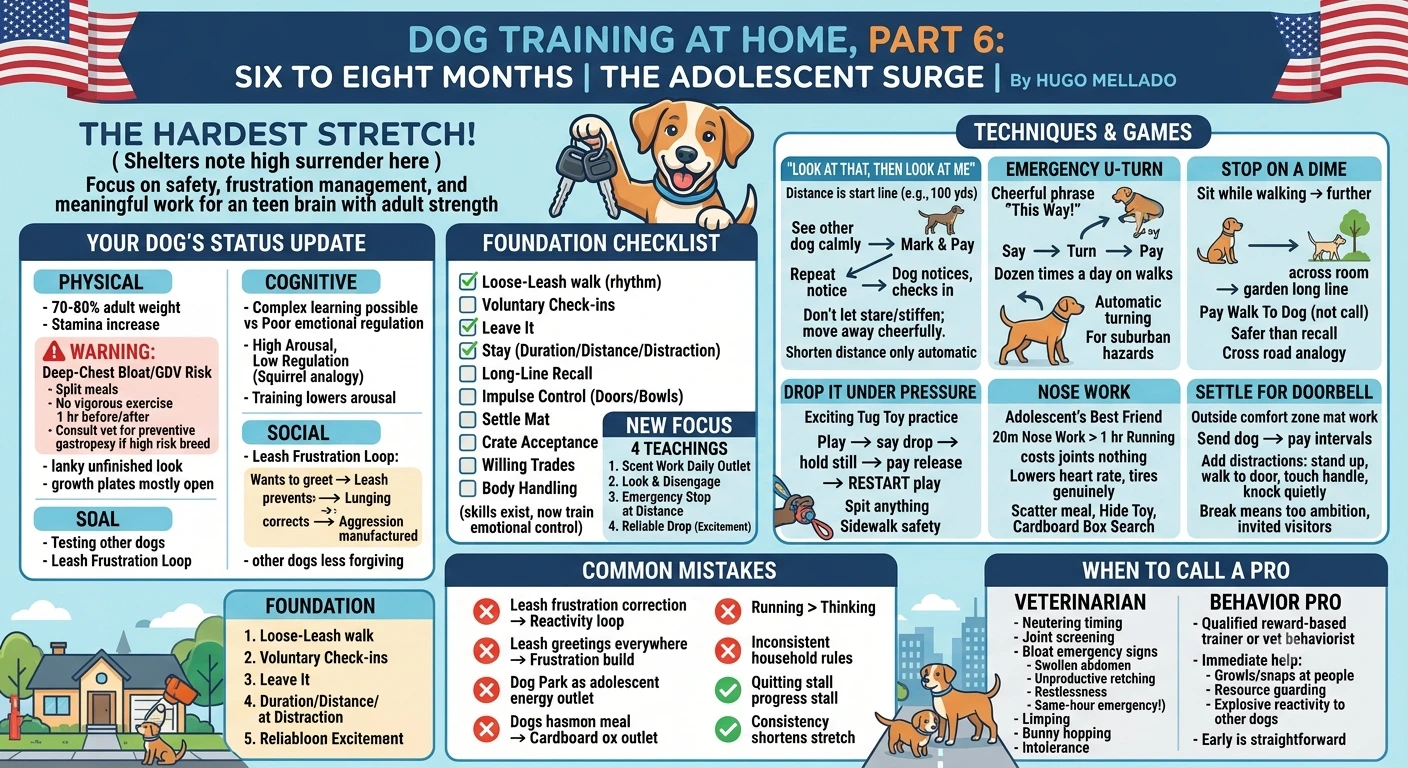
The hardest stretch of adolescence: preventing leash reactivity, teaching an emergency U-turn and a stop at distance, releasing anything on cue, and using scent work as a daily outlet.
-
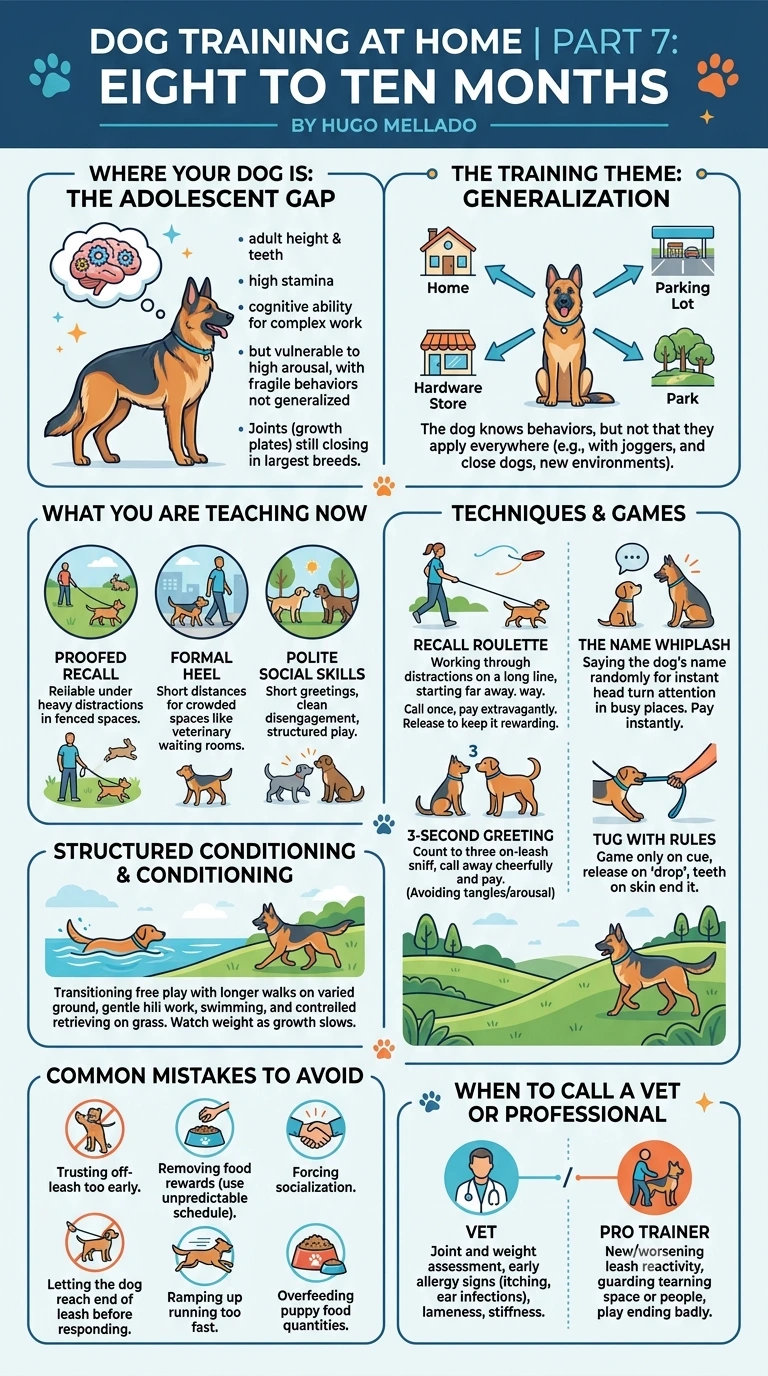
Generalization is the theme: proofing recall against real distractions, teaching heel as a short-distance tool, and building polite, structured social skills with other dogs.
-

The real world: a portable settle for cafés and waiting rooms, a visitor protocol for the front door, safe car travel, and cooperative care including a muzzle your dog actually likes.
-
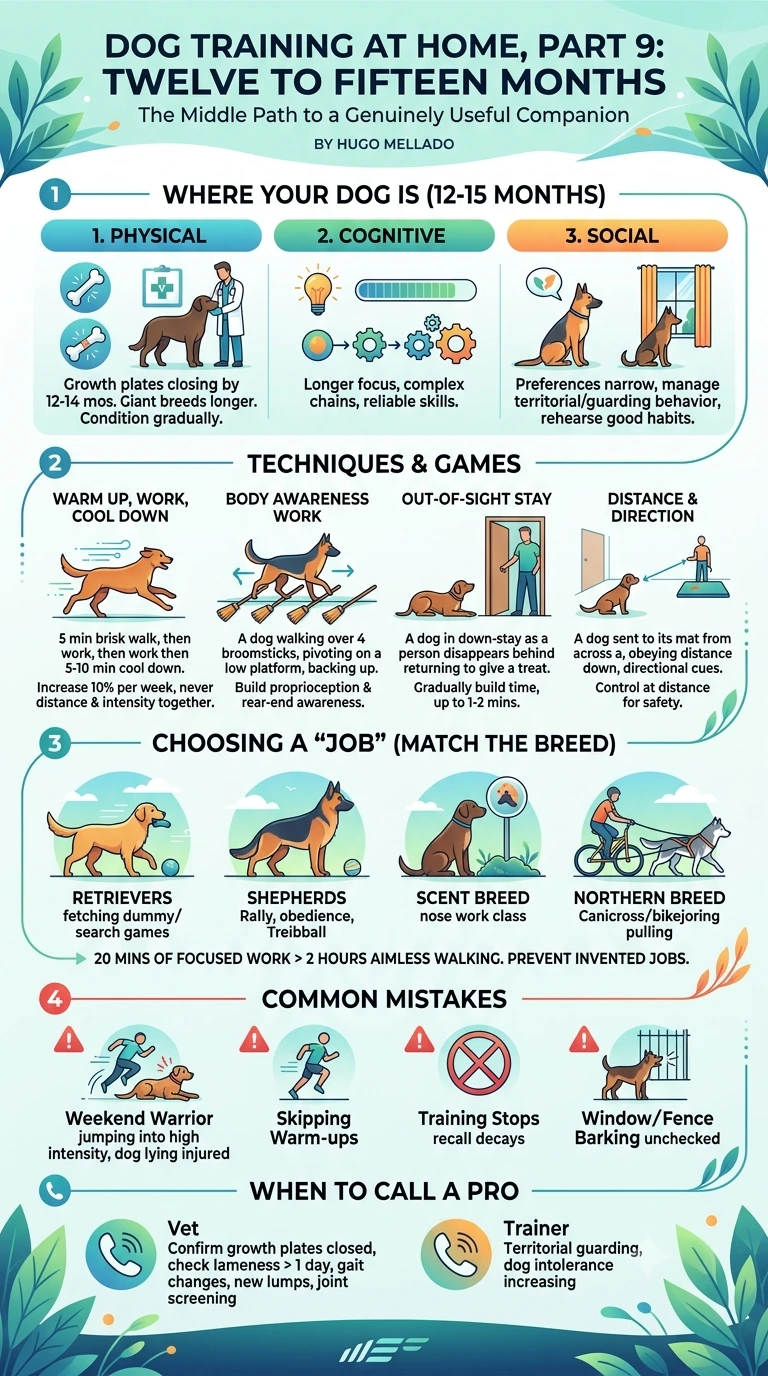
Conditioning a mature body safely, extending obedience to distance and out-of-sight stays, and choosing a job that fits the breed in front of you.
-
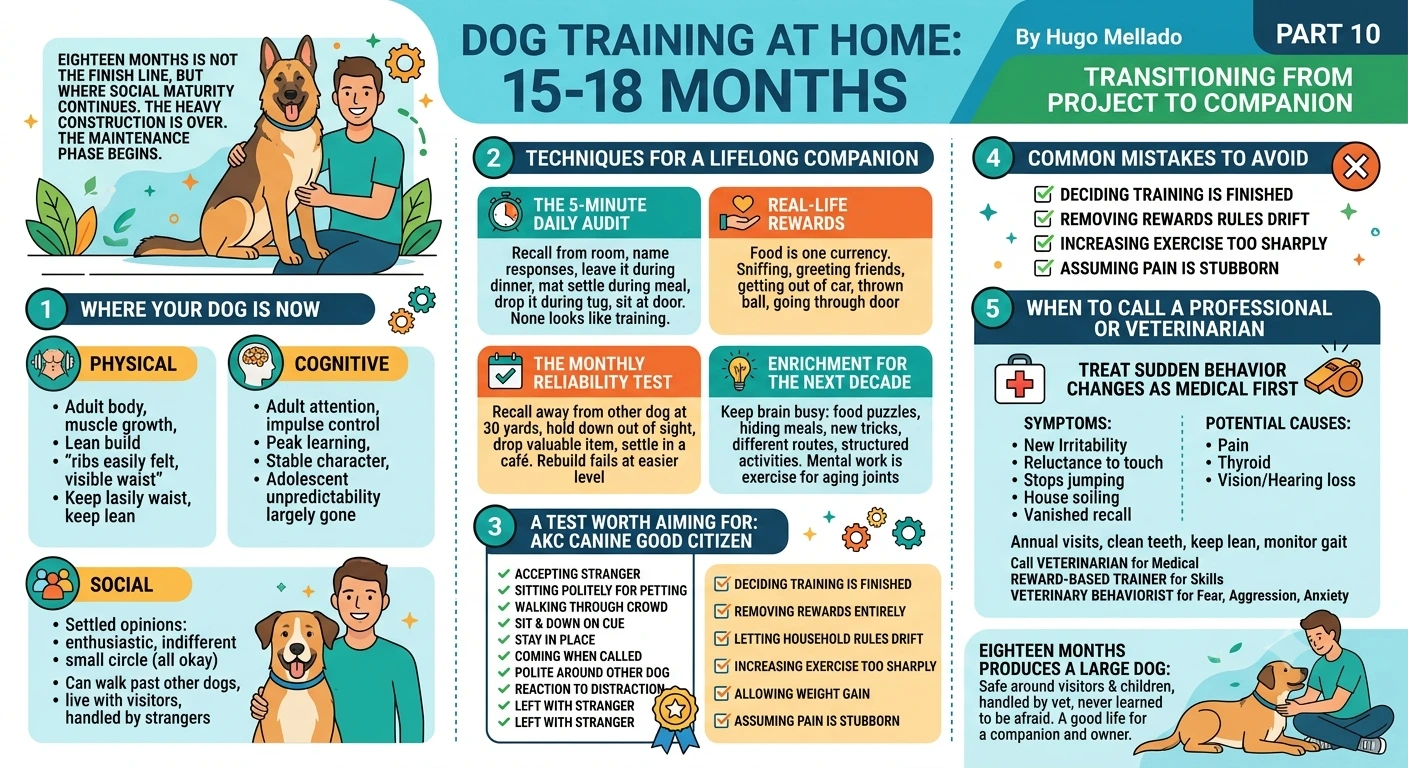
Consolidation: what eighteen months of work has produced, the five-minute daily audit that keeps it, real-life rewards, a monthly reliability test and a maintenance plan for the next decade.