
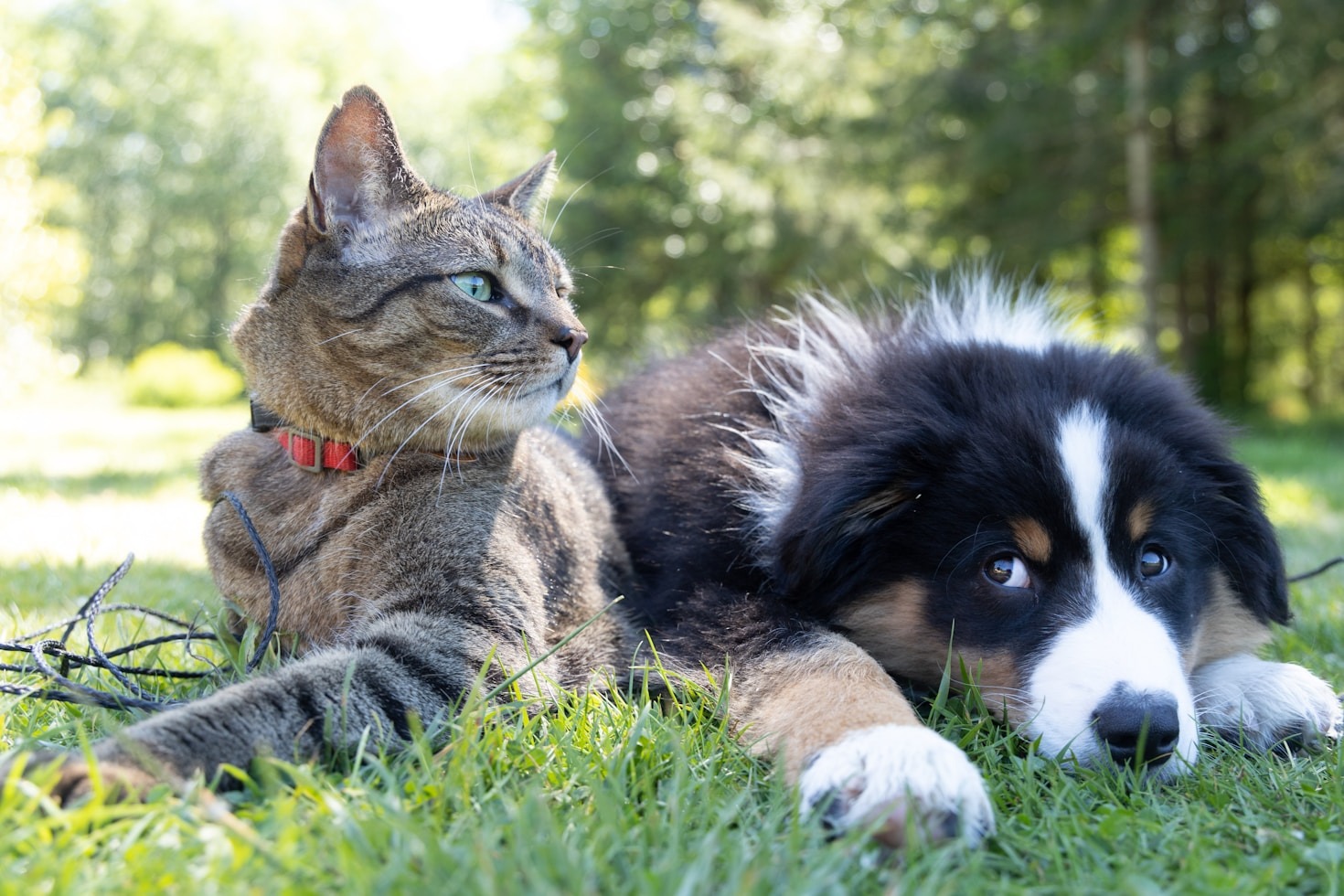
People rarely describe the decision to live with an animal as a practical one. They describe a feeling: a face at a shelter window, a kitten asleep in a box, a dog that leaned against their leg and stayed there. The years that follow are made of practical things, though. Bowls filled at the same hour, vet appointments, walks in bad weather. What a pet gives back lives somewhere between that first feeling and the daily routine.
This article looks at what animals give the people who care for them, including people who live alone, what the research does and does not support, and when a pet is the wrong answer.
An animal gives the day a shape
Almost everyone who lives with a pet describes the same change: the day gets a structure. A dog needs to go out in the morning whether or not you slept well. A rabbit expects fresh hay at a predictable time. Fish need their feeding measured and their water tested on schedule.
That structure sounds trivial until you need it. Routine is one of the few things that reliably steadies a difficult period, and an animal supplies it without negotiation. People who have come through a bereavement, a divorce or a long illness often say the animal was the reason they got out of bed, and they mean it literally. An obligation to a creature that depends on you is good at overriding the inertia that loneliness and low mood produce.
Company that asks for nothing in return
Human company, even good company, takes effort. You explain yourself and ask how the other person is. An animal removes that layer. A cat on the arm of a chair is company without conversation, and for many people that is exactly what they were missing.
Loneliness is not the same as being alone. People can feel lonely in a full house and content in an empty one. What loneliness often involves is not being noticed: nobody registers whether you came home, and nothing in the day is addressed to you. An animal changes that. Someone is waiting for breakfast; someone notices when you get up. There is also touch. Adults who live alone can go a long time without any physical contact, and an animal on your lap is not a substitute for human closeness, but it is not nothing either.
None of this means pets replace human relationships, and anyone who says they do is overselling. What they do is fill specific gaps: the hours when a house would otherwise be silent, the evenings when talking feels like too much, and the stretch after a loss or a move when your social life has not caught up.
A reason to go outside, and to meet people
Dog owners walk more, and it is not because they are unusually disciplined; it is because the dog is standing by the door. Over a year, two twenty-minute walks a day add up to more regular activity than many people manage any other way, because the motivation comes from outside and repeats every day.
The side effect most people do not expect is social. A dog takes you into public space at the same times as other people with dogs, and dog walking creates easy, low-stakes conversation: the animals provide the topic and the exit. Over months this often becomes a local network of names and routines, and people who ask after you if you have not been around. Many people who live alone say their dog reconnected them with their own street.
Learning to read another creature
This may be the most underrated benefit. Animals do not use words, so living with one is a long lesson in attention. You learn that your dog holds its ears differently when it is unsure, that a rabbit flattening itself is frightened rather than relaxed, and that a cat that stops grooming is telling you something important. That habit of noticing tends to carry over to people, and it is one reason children who grow up with animals often learn patience with things that cannot be rushed. We look at that in What Children Learn From Growing Up With a Pet.
What the research supports, and what it does not
The evidence is encouraging but more mixed than headlines suggest. NIH News in Health, summarizing research funded by the National Institutes of Health, notes that interacting with animals has been linked to lower levels of the stress hormone cortisol, lower blood pressure, less loneliness and better mood, but also that the field is relatively young and results have been mixed.
On heart health, a 2013 scientific statement from the American Heart Association concluded that pet ownership, particularly dog ownership, may be reasonable for reducing cardiovascular risk, partly because of the extra physical activity. The same statement is clear that people should not get a pet primarily to reduce that risk. Part of the difficulty in this research is that people who choose to own pets differ from those who do not in ways that are hard to separate out.
A sensible reading: a pet is very likely to improve your daily experience, and it is not a treatment. If you are struggling with depression, anxiety or chronic loneliness, speak to a professional. An animal belongs alongside that support, not instead of it.
When a pet is the wrong answer
There are situations in which getting an animal, especially to ease loneliness, makes both the person and the animal worse off:
- When the money is not there. Worry about a vet bill you cannot pay can be worse than the loneliness the pet was meant to ease, and the animal suffers first.
- When physical care is not possible. A dog needs walking for a decade or more. If mobility is limited or declining, a cat, a pair of guinea pigs or an aquarium may be the kinder choice.
- When nobody can take over. Older owners in particular should arrange in advance who will take the animal if they cannot. Shelters take in many pets whose owners died or moved into care with no plan in place.
- When life is already at capacity. Adding a dependent animal to a life at its limit is not company; it is one more thing that can go wrong.
The costs, in money and time
An animal is ten or twenty years of responsibility. Food, preventive care, vaccinations, parasite control, dental work, insurance or an emergency fund, boarding when you travel, and replacing whatever gets chewed. Emergency visits in the United States commonly reach four figures; our guide to pet insurance covers one way to plan for them. Time is the other cost: exercise, enrichment, cleaning, training, and no more weekends away on impulse.
Then there is the ending, which nobody mentions at the shelter. Most pets are outlived by their owners, and that grief is real. People who have been through it almost always say they would do it again.
Choosing well, especially if you live alone
For many people living alone, an adult rescue cat is the best fit: affectionate, independent enough to be left during the day, cheaper than a dog, and usually already litter-trained with a known temperament. A calm adult dog is the strongest option if you can walk it daily and afford it, because of the outdoor and social benefits. A pair of guinea pigs or rabbits gives daily interaction and routine without the walks, and an aquarium gives ritual and something alive in the room for people who cannot care for a mammal.
Whatever the species, consider an adult animal whose behavior the rescue can describe, and read the care guide first. Our article on choosing your first pet goes through the practical filters.
So is life better with a pet?
For most households that can afford the money, the time and the years, yes. Not because animals are magic, but because caring for something outside yourself every day tends to make people steadier, and because a home with an animal in it feels different. For households that cannot, the answer can still be yes to something smaller: fostering, volunteering at a shelter, or a species whose needs match the life you have. The worst outcome is not going without a pet. It is an animal returned to a shelter at eighteen months because the decision was made on feeling alone.
Sources and further reading
- NIH News in Health: The Power of Pets (2018)
- Levine, G. N. et al. (2013). Pet Ownership and Cardiovascular Risk: A Scientific Statement From the American Heart Association. Circulation
- CDC Healthy Pets, Healthy People: People at Increased Risk for Illness from Animals
Updated September 23, 2026: this article now includes our earlier piece on pets and loneliness, with sources for the research it discusses.
Keep reading: All pet care guides · Choosing Your First Pet · What Children Learn From Growing Up With a Pet
Pet & Pet publishes educational content written by Hugo Mellado. It is not veterinary advice and never replaces an examination by a licensed veterinarian. If an animal is unwell, contact a veterinary professional. Read our full Disclaimer and Editorial Policy.
Leave a Reply