
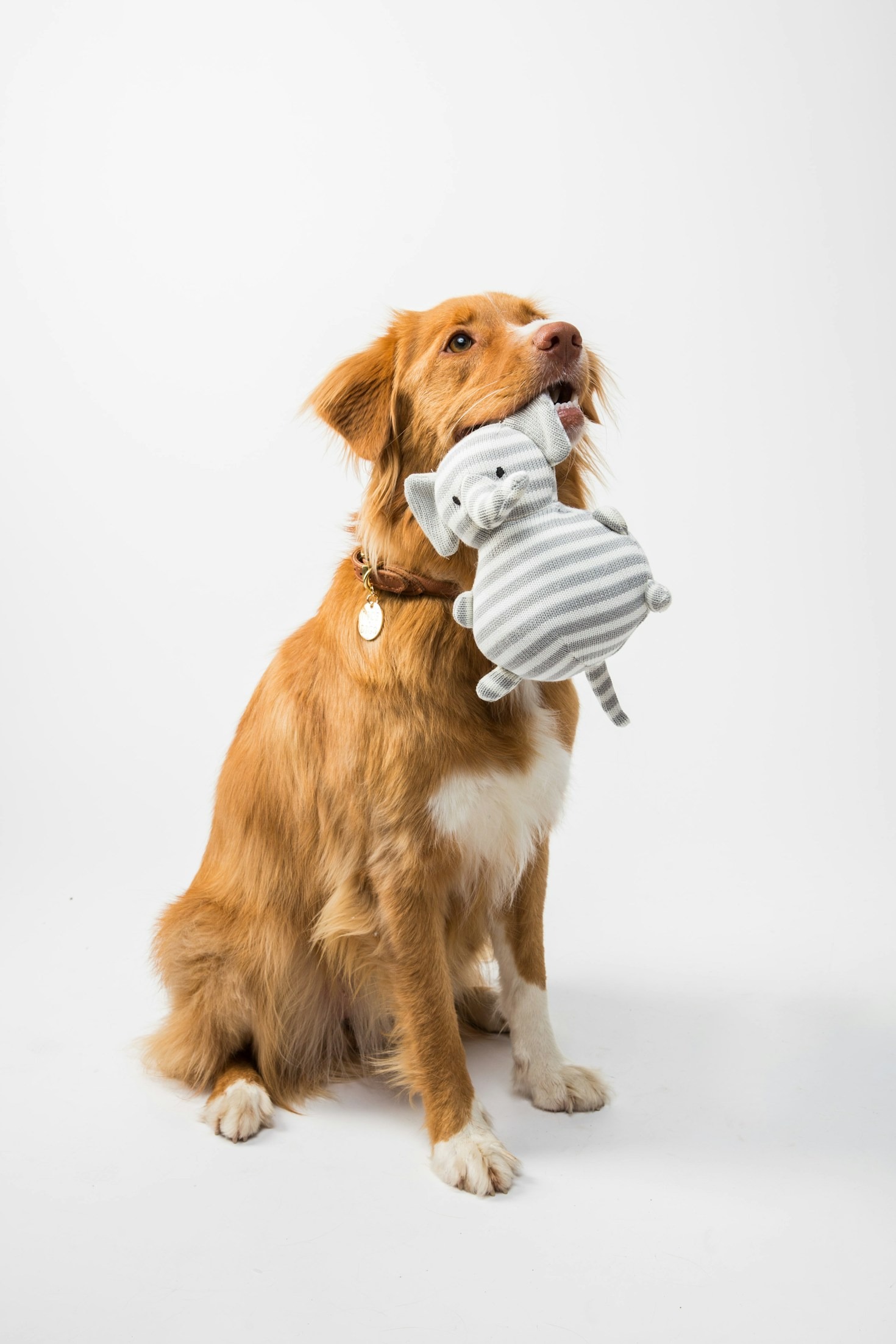
Parents of autistic children who have worked with an assistance dog tend to describe the change in unexpected terms. They rarely start with the child. They start with the front door, the supermarket, the school gate, the fact that the family went out on a Saturday and it was fine. The dog changed what the household could attempt.
Autism assistance dogs are among the most emotionally compelling and most oversold forms of assistance work. This article sets out what these dogs are actually trained to do, what the evidence supports, and the significant reasons a dog is the wrong answer for some families.
The tasks these dogs are trained to perform
Under the Americans with Disabilities Act a service animal is a dog individually trained to do work or perform tasks related to a disability. In autism assistance that work usually falls into four groups.
- Preventing bolting. The best-known task. A child is tethered to a harness on the dog, with the adult holding the lead, and the dog is trained to brace or sit if the child pulls away. For families whose child runs into roads or car parks, this single function is often the reason they applied.
- Deep pressure and grounding. The dog lies across the child lap or chest on cue. Sustained pressure is calming for a great many autistic children, and the dog provides it in places where a weighted blanket is not available.
- Interrupting distress and self-injury. The dog is trained to nudge, lick, lean or place a paw when it detects escalation, which can break a spiral before it becomes a full crisis.
- Tracking and search. Some programmes train dogs to follow a scent trail if a child leaves the house, which for wandering children is a safety measure of a very direct kind.
What happens during a crisis
It is worth being precise about this, because the popular version is vague and the real mechanism is more interesting.
The dog does not calm the child by being lovable. It provides a competing input. During overload, sensory information is too much and too disorganised, and a large, warm, steady, breathing animal delivering firm pressure gives the nervous system something predictable to attach to. Many handlers report the child breathing shifts towards the dog rhythm within a minute or two.
There is also a substitution effect. A child who bangs their head or bites their hand may redirect to stroking the dog, which occupies the same urgency with a different action. And there is the exit function: the dog gives the family a socially acceptable reason to leave a shop or a room without a conversation, which sounds trivial and is not.
Well-run programmes are careful to say the dog reduces frequency and severity. It does not abolish meltdowns, and a household expecting that will be disappointed in a way that is unfair to the animal.
The effect on the whole family
This is where the evidence is strongest, and it is not primarily about the child. Studies of families placed with autism assistance dogs report reduced parental stress, improved parental sense of competence and better sleep in some households, and these findings recur across several groups.
The mechanisms are practical. Parents worry less about bolting, so outings become possible. Bedtime is easier when a dog sleeps in the room. Siblings get a family life that is less organised entirely around crisis avoidance. And there is a social effect: strangers who would have stared at a distressed child instead ask about the dog, which changes the temperature of public life for the whole family.
What the research does and does not establish
Findings on child outcomes are more modest and less consistent than parent-reported outcomes. Several studies show improvements in social initiation, reduced anxiety and better sleep. Others show little measurable change on standardised measures. Sample sizes are generally small, control groups are rare, blinding is essentially impossible and the families who apply for dogs are not a random sample of families.
The fair summary is that these dogs reliably change what families can do and how parents feel, and that claims about improving autistic traits themselves are not well supported. An assistance dog is not a treatment for autism and should never be presented as one. It also sits alongside, never instead of, the support a family gets from clinicians, therapists and schools.
When a dog is the wrong answer
Programmes with integrity screen families out, and it is worth knowing why.
- Sensory aversion to animals. If the child finds fur, noise, movement or smell distressing, a dog adds to the load rather than relieving it. This is common and it is decisive.
- Risk to the dog. A child who hits, pulls or throws things during a crisis may injure an animal that has no way to consent. No responsible placement ignores this.
- Adult capacity. The dog is the adult responsibility. It needs walking, feeding, grooming, veterinary care and skills maintenance for a decade. A household already at its limit will find a dog adds work before it removes any.
- Cost and waiting. Accredited programme dogs frequently represent twenty to forty thousand dollars, usually part-funded by charity, with waiting lists commonly measured in years.
- Family agreement. If one adult does not want a dog, the placement usually fails, and the animal lives in a house where it is resented.
Choosing a programme, and avoiding the bad ones
This field has attracted operators selling dogs that cannot do the work. There is no federal certification for service dogs, and any registry, certificate or ID card offered for sale is meaningless, as we explain in our overview of how service dogs are defined.
Ask to see a placed dog performing the specific tasks you need. Ask how many placements the programme has made and how many were returned. Insist on speaking to families you found yourself rather than references chosen for you. Ask what training the family receives, how long follow-up support lasts and what happens if the match does not work. Ask about the dog health screening, temperament assessment and public-access training. A serious programme answers all of that without hesitation and will tell you honestly if your family is not a good candidate.
For the ordinary daily care every assistance dog still needs, see our dog care guide.
Keep reading: Service dogs explained · Diabetic alert dogs · Dog care guide
This article is educational and is not medical or clinical advice. Decisions about support for an autistic child should be made with qualified professionals who know the child. Pet & Pet content is written and reviewed by Hugo Mellado, who is not a veterinarian or a clinician. See our Disclaimer.
Leave a Reply